· planning · 16 min read
What to Wear for an Ice Cave Tour in Iceland: A Packing Guide From the Guide Who Runs the Tour
What to wear for an Iceland ice cave tour: wool base layers, a waterproof shell, and sturdy hiking boots — the boots matter most. Practical advice from a local guide.
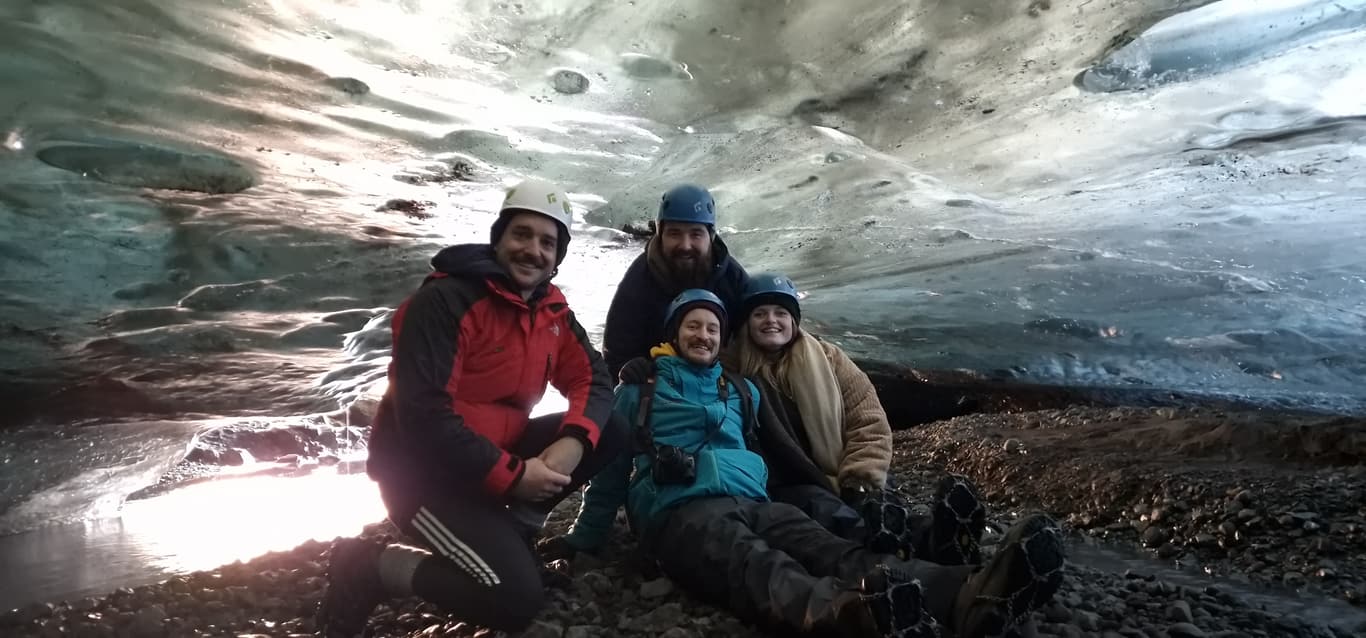
What to wear for an ice cave tour in Iceland — base layers, a mid-layer, a waterproof shell, warm socks, and above all the right boots. Written by Sindri, who has watched a decade of guests arrive at Jökulsárlón dressed for it and, sometimes, not.
The short version
For an ice cave tour at Jökulsárlón you want a warm base layer (wool or synthetic, never cotton), a fleece or wool mid-layer, a waterproof and windproof outer shell, a hat that covers your ears, insulated gloves, warm socks, and — the single most important item — sturdy hiking boots with ankle support. We hand you the glacier gear you actually need on the day: micro spikes when the ice calls for them, a helmet, and a headlamp if we're going anywhere dim. You don't have to buy any mountaineering equipment to come.
I'm Sindri. My wife Fanney and I run Glacier Trips from Höfn in South-East Iceland, a small family company, and I still guide most winter days with our small team of local guides. I've watched a decade of guests step out of the car at the Jökulsárlón parking lot — some dressed perfectly, some in jeans and trainers, cold before we'd even reached the Super Jeep. This is the article I wish everyone read before driving south.
The layered system: how to dress for the cold
Iceland winter isn't usually brutal by the thermometer alone — inside the cave it typically sits around 0°C (32°F), and outside, mid-winter days usually run from about −2°C to +4°C (28–39°F). What gets people is the combination: wind, moisture, and standing around on ice make it feel far colder than the number suggests. The answer is layering. You trap warm air against your body, move sweat away from your skin, and block the wind and water on the outside. Three layers do it.
Here is the whole system in one table, then the detail on each piece.
| Layer | What it does | Good examples |
|---|---|---|
| Base (next to skin) | Wicks sweat away so you stay dry, and dry means warm | Merino wool or synthetic thermal top and leggings |
| Mid (insulation) | Traps warm air; the layer you add or shed as you heat up and cool down | 200-weight fleece, thick wool jumper, light down or synthetic puffy |
| Outer shell (weather) | Blocks wind and water; doesn't insulate on its own | Waterproof hardshell or softshell jacket and shell trousers, both with hoods |
1. Base layer (closest to skin)
A wool or synthetic thermal long-sleeve top and leggings. The base layer's one job is to move moisture off your skin so you stay dry — because dry is what keeps you warm.
The one rule: no cotton. Cotton soaks up moisture, holds it against your skin, and stops insulating the second you sweat. A cotton t-shirt under a fleece is how people end up cold for the whole day. Stick to merino wool (my pick), polyester, or any technical synthetic. Icebreaker, Smartwool, Patagonia Capilene, Under Armour ColdGear, Decathlon Forclaz — anything labelled "thermal", "merino", or "base layer" at an outdoor shop will do.
2. Mid-layer (insulation)
A fleece jacket, a wool jumper, or a light down vest. This is the layer that traps warm air, and it's the one you'll be adjusting all day. On the coldest days, two thinner mid-layers beat one heavy one, because you can peel a layer off as you warm up walking and add it back when you're standing still inside the cave. A 200-weight fleece or a lightweight puffy works beautifully. A cotton-blend hoodie does not — it stops insulating the moment it's damp.
3. Outer shell (wind and water)
A waterproof, windproof jacket and trousers. This layer isn't there to keep you warm — it's there to keep Iceland's weather off you. Shell trousers over your normal trousers, plus a hardshell or softshell jacket, both with hoods. Brand-name Gore-Tex is lovely but not required; any technical shell rated for hiking or skiing, at any price, does the job. If you're arriving with light luggage, Reykjavík outdoor shops rent shell jackets and trousers.

The single most important item: hiking boots
If I could give one piece of advice to every guest, it would be this: bring sturdy hiking boots with ankle support, or rent a pair in Reykjavík before you drive south. Boots matter more than any other single thing you pack, and here's why.
- The spikes need a proper boot. We fit micro spikes to your footwear when the ice calls for it, and they need a firm boot to grip. Soft trainers either won't hold the strap or the strap digs painfully into your foot.
- Ankle support keeps you out of trouble. Glacier ice is uneven, and a twisted ankle a good walk from the Super Jeep turns a nice morning into a hard one.
- A stiff sole grips; a soft one flexes. Rigid soles work with the spikes; soft soles bend around them and lose their bite.
- Warm feet make the day. Trainers get wet and then freeze. Proper boots stay dry and insulated, and dry feet are the difference between enjoying the cave and counting the minutes.
What counts as proper boots: waterproof leather or synthetic boots that rise above the ankle, with a stiff sole. Salomon, Merrell, Lowa, Scarpa, Meindl, Hanwag, Vasque — any of them. Old boots from a previous trip are perfectly fine; they don't need to be new or expensive.
What doesn't count: running shoes, casual trainers, fashion boots, work boots without ankle support, rubber wellingtons, Uggs and similar. I've had guests turn up in every one of these, and the day was harder each time.
No boots? Rent them. Iceland Camping Equipment (66°North), Cintamani, Útilíf, and Fjallakofinn all rent boots in Reykjavík. On Adventures Dream you can also rent a pair from us for 2,000 ISK: add them when you book, or email us your EU size and pay on the day. Budget roughly 2,000–4,000 ISK for the day or the week, and plan a 30-minute stop on your way out of the city.
Hat, gloves, socks — the small things that matter
A hat that covers your ears
A wool or fleece beanie that fully covers your ears. Wind on an exposed glacier finds bare ears in seconds. A baseball cap is not a hat for this trip, and ear-only headbands leave the top of your head out in the cold. Bonus item: a Buff or neck gaiter to pull up over your face when the wind picks up.
Insulated gloves (and a backup pair)
Insulated, waterproof gloves — ski gloves are ideal. The catch is that you'll want them off to use a camera or phone, and hands cool fast in the cave. A thin liner glove underneath lets you slip the outer glove off for a quick photo without going bare-handed. Bring a spare pair if you have one.
Warm socks
Wool or synthetic, not cotton. Pack a second pair in case the first gets damp on the Super Jeep ride. Merino hiking socks — SmartWool, Darn Tough, Icebreaker — are exactly right.
What we provide on the short tour
On our short Ice Cave Inside Vatnajökull tour, you don't need to buy or rent any glacier gear. We bring what the day requires:
- Micro spikes — the grips we fit to your boots when the ice calls for them.
- Helmet — for the odd bit of falling ice.
- Headlamp — when we're heading into a darker section of the cave.
- Guide safety equipment — first-aid and the rest, carried by your guide.
That's the kit for the short tour. If you'd rather have more time on the ice and a proper glacier hike, our longer Adventures Dream tour uses crampons, a harness, and an ice axe when the route needs one — all provided, and all fitted and explained by your guide before you set foot on the glacier.
Small things to bring
- A small backpack — for water, snacks, camera, and a spare layer.
- Water — you dehydrate on the ice even when you don't feel thirsty.
- Snacks — a granola bar or some chocolate; the tour doesn't include food.
- Sunglasses — glare off snow on a bright day is fierce. Not always needed, but nice to have.
- Camera or phone — a modern phone photographs the blue ice surprisingly well.
- Hand warmers (optional) — disposable ones tucked into your gloves on a cold day.
- Power bank — cold drains phone batteries fast.
What not to bring
- Cotton next to your skin — t-shirts, hoodies, jeans.
- Trainers or fashion boots — the spikes won't grip them, and the terrain won't forgive them.
- Cheap rain ponchos — Icelandic wind shreds them in minutes.
- Bulky scarves — they tangle with the spike straps and your helmet. A Buff does the same job cleanly.
- A big framed daypack — keep it light; you carry it on the ice.
- A tripod on the short tour — it's allowed, but it slows the group. If photography is the point of your trip, our Adventures Dream tour gives you the time and the smaller group to use one.
A note for photographers
If you're bringing a real camera, a few extras earn their place in your bag. Two layers of gloves — a thin liner for working the buttons, a warm outer for the rest of the time. A microfibre cloth for the condensation that hits your lens when you carry the camera from the cold into a warm car. Spare batteries kept in a warm inside pocket, because cold flattens them fast. And a lens cloth and a rocket blower — ice dust does find its way onto glass. I've also written up whether you can bring a tripod, and which kind works on ice.
Flying in light? What to rent in Reykjavík
You don't need to arrive in Iceland with a duffel bag of mountaineering gear. The essentials — hiking boots, a shell jacket, shell trousers — rent easily in Reykjavík, and a 30-minute stop on your way out of the city sorts you out.
- Iceland Camping Equipment (Bíldshöfði 9) — comprehensive winter rental kit.
- Fjallakofinn (Skipholt 27 or Kringlan mall) — hiking boots and outerwear.
- Útilíf (Kringlan and Smáralind malls) — outerwear and accessories.
- 66°North (several Reykjavík locations) — high-end shell jackets.
Frequently asked questions about what to wear
Do I need a winter coat for an ice cave tour?
Not necessarily, and a single heavy coat often isn't ideal because most aren't waterproof. The layered system — base, mid, and a waterproof shell — beats one thick coat because you can adjust it through the day. That said, if your winter coat is genuinely waterproof and has a hood, wear it as your outer shell with a fleece underneath.
Can I wear jeans on an ice cave tour?
Not on their own — jeans are cotton, they soak up moisture, and they don't insulate. With thermal leggings underneath and waterproof shell trousers on top, they'll get through the day. The cleaner setup is thermal leggings plus shell or softshell trousers, and skip the jeans altogether.
Are sneakers OK for an ice cave tour?
No. The micro spikes we fit need a proper boot with ankle support to grip, and I've watched guests in trainers either struggle the whole way or have to sit out the glacier section. If you don't own hiking boots, rent a pair in Reykjavík before you drive south.
Do I need waterproof trousers?
Strongly recommended. Iceland's weather can turn from dry to sideways snow in fifteen minutes, and sitting in damp trousers in the Super Jeep on the way back is miserable. Shell trousers over thermal leggings or normal trousers handle whatever the day throws at you.
How cold is it really inside the ice cave?
Inside the cave it's typically around 0°C (32°F), and it feels surprisingly comfortable in proper layers because there's no wind. Outside it's more variable: mid-winter days usually run from about −2°C to +4°C (28–39°F), and cold snaps of −10°C (14°F) come most winters. Wind matters far more than the temperature on its own.
What about kids — same gear?
Yes, the same layering, and children from age 8 are welcome on our short tour. Kids' merino base layers, a fleece mid, a waterproof shell, hiking boots with ankle support, a hat, and insulated gloves. Bring a spare pair of gloves and socks — small hands and feet get wet and cold faster than grown-up ones.
Can I buy gear in Iceland on arrival?
You can, but it's expensive — a Gore-Tex shell jacket runs 40,000–80,000 ISK new in Reykjavík. For a single tour, renting is far cheaper. If you're staying in Iceland for a long winter trip, buying might pay off; for one cave visit, rent.
What if I'm doing the longer Adventures Dream tour?
Same layering, with two tweaks: bring a heartier snack and more water for the 5–6 hour day, and add a thin mid-layer you can shed once you warm up on the glacier hike. Adventures Dream is more active and runs a smaller group of eight — the extra gear it needs, crampons and a harness among it, is all provided and fitted by your guide.
A simple packing checklist
- ☐ Wool or synthetic thermal base layer (top and bottom)
- ☐ Mid-layer fleece or wool jumper
- ☐ Waterproof shell jacket with hood
- ☐ Waterproof shell trousers
- ☐ Sturdy hiking boots with ankle support
- ☐ Wool or synthetic socks (plus a spare pair)
- ☐ Hat that covers your ears
- ☐ Insulated gloves plus thin liner gloves
- ☐ Buff or neck gaiter
- ☐ Small backpack
- ☐ Water bottle
- ☐ Snacks
- ☐ Sunglasses
- ☐ Camera or phone plus a power bank
Turn up with everything on this list and you'll be comfortable all day — which means you'll actually enjoy the cave instead of counting the minutes until the car heater.
Ready to book?
- Ice Cave Inside Vatnajökull — 2.5–3 hours, from 23,900 ISK.
- Adventures Dream — 5–6 hours, smaller group of 8, from 36,900 ISK.
Planning the rest of the trip? It's worth reading how much an ice cave tour costs, what's included in the package, which month is best to visit, and — if you're still deciding — whether the tour is worth it. For the full background, read Iceland's ice caves, explained.
Booking direct on glaciertrips.is puts you straight in touch with us, and the code DIRECT5 takes 5% off. Any gear question at all — "is this jacket warm enough?" is one I've answered a hundred times — email info@glaciertrips.is and you'll get a real answer from one of us.
Sindri
Glacier Trips · Höfn, Iceland · family-run since 2015